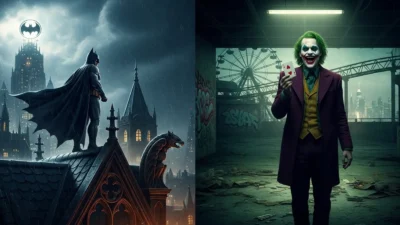
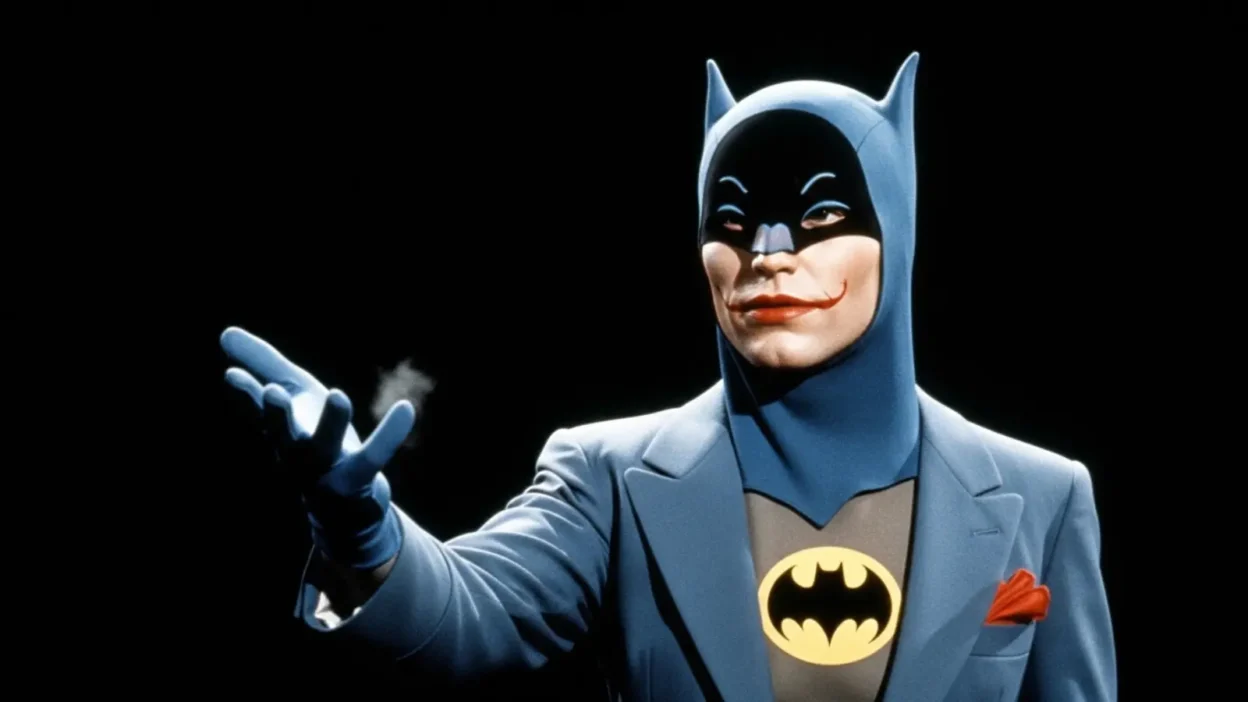
Step into the swinging 1960s, where Gotham City wasn’t just a dark, brooding metropolis it was a kaleidoscope of bright colors, campy adventures, and unforgettable characters. Among them, one figure stood out with a manic grin and an infectious laugh that could send shivers down anyone’s spine: the one and only Batman 1966 The Joker .
Portrayed with whimsical menace, this Joker wasn’t just a villain; he was a mirror of chaos, teasing the boundaries between fun and fear. Let’s take a deep, emotionally engaging journey into the world of this legendary character, uncovering the artistry, psychology, and cultural impact that made him an icon for generations.
The Origins of Batman 1966 The Joker and His Psychedelic Persona
- 🎭 The Joker burst onto the scene in the 1966 TV series, redefining comic book villainy with theatrical flair.
- 🌈 His look—green hair, pale skin, and a bright purple suit—was inspired by both comics and the era’s psychedelic aesthetic.
- 😈 Unlike later dark iterations, this Joker embraced campy humor while keeping Gotham citizens on edge.
- 🃏 Actor Cesar Romero famously refused to shave his mustache, letting it peek through the Joker makeup, adding unique charm.
- 💥 The Joker’s chaotic schemes often included oversized boxing gloves, squirting flowers, and hypnotic laughter.
- 🧩 He was not just a criminal; he was a puzzle, challenging Batman’s intellect and moral compass.
- 🎬 Each appearance was carefully choreographed to balance fear with playful absurdity.
- 🕶️ The character reflected 1960s pop culture, merging comic books with television glamour.
- 💡 His color palette symbolized mischief, unpredictability, and rebellion against traditional villain norms.
- 🎨 Costume designers and makeup artists worked to ensure his look was instantly recognizable yet surreal.
- 🔍 The Joker’s persona tapped into psychological archetypes of tricksters, clowns, and anti-heroes.
- 🧠 His laugh wasn’t just a sound effect—it was a character trait that communicated cunning intelligence.
- ✨ The Joker’s theatrical entrances often stole scenes, turning ordinary moments into iconic TV memories.
- 🎁 Each episode leveraged his unpredictability to surprise audiences and keep the narrative fresh.
How Batman 1966 The Joker Redefined Villain Humor
- 😂 He introduced slapstick humor to villainy, blending menace with laughter.
- 🕴️ Every plan had comedic twists that revealed his cleverness without losing threat.
- 🎯 Physical gags, like banana peels and trapdoors, elevated tension while amusing viewers.
- 🎵 The Joker often sang or recited rhymes, enhancing memorability.
- 🤹 He blurred lines between harmless fun and serious crime, creating suspense.
- 🖼️ Props like oversized mallets and confetti bombs became his signature.
- 🎬 Timing was everything—each joke landed with calculated precision to maximize audience reaction.
- 🐍 His mischief often mocked Gotham’s authority figures, reflecting countercultural commentary.
- 💌 His playful taunts toward Batman showcased verbal dexterity and intelligence.
- 🖌️ Visual humor, from exaggerated facial expressions to costumes, created a comic-strip feel.
- 🎠 Recurring jokes strengthened viewer attachment and brand identity for the character.
- 🧩 He incorporated puzzles into humor, challenging heroes and viewers alike.
- 🌟 His comedic timing became a template for future TV and film villains.
- 🎉 Humor made him approachable for younger audiences, while still thrilling adults with clever menace.
The Psychology Behind Batman 1966 The Joker
- 🧠 His unpredictability created constant tension, engaging audiences emotionally.
- 🎭 The Joker embodies the archetype of the trickster, thriving on disruption.
- 😱 He manipulates fear with playfulness, a duality that fascinates viewers.
- 💔 His charm masks deeper psychological complexity, showing charisma and cruelty simultaneously.
- 🕵️ He challenges Batman’s moral code, reflecting ethical dilemmas in storytelling.
- 🌪️ His chaotic actions mirror psychological themes of disorder versus order.
- 💡 Understanding his motives requires analyzing both humor and menace.
- 🌀 The Joker’s laughter triggers mirror neurons, making viewers feel both tension and amusement.
- 🎯 He often sets traps that test perception, logic, and emotional control.
- 🌑 His darkness is softened by camp, making psychological tension accessible.
- 📚 His behavior can be dissected using concepts of narcissism and manipulative intelligence.
- 🖤 Audiences are drawn to the thrill of danger wrapped in theatricality.
- 🎩 His iconic gestures—like bowing or theatrical exits—reinforce psychological dominance.
- 🔍 Exploring his psyche reveals insights into human fascination with chaos and charm.
Iconic Episodes Featuring Batman 1966 The Joker
- 📺 “The Joker Is Wild” – Showcased his flair for dramatic entrances.
- 🎯 “The Joker’s Flying Saucer” – Blended sci-fi elements with comic mischief.
- 💣 “Batman’s Million Dollar Debut” – Introduced chaotic schemes involving money and trickery.
- 🃏 “The Joker’s Hard Times” – Balanced emotional depth with playful villainy.
- 🚨 “The Laughing Fish” – A quintessential example of his humor-meets-crime style.
- 🎩 “The Joker’s Flying Circus” – Highlighted acrobatics and whimsical antics.
- 🔮 “The Joker’s Trick Bag” – Incorporated illusion and surprise for high entertainment value.
- 🌈 “The Joker Goes to School” – Explored social commentary with a humorous twist.
- 🎬 “The Joker’s Utility Belt Caper” – Showcased his clever adaptation to Batman’s tools.
- 💌 “The Joker Sends a Love Letter” – Mix of romantic parody and menace.
- 🏰 “The Joker in Gotham Castle” – Grandiose sets enhanced his theatricality.
- 🎡 “The Joker’s Carnival of Crime” – Turned familiar environments into chaotic playgrounds.
- 🎭 “The Joker’s Masquerade” – Master of disguise and playful deception.
- 🧩 “The Joker’s Puzzle of Peril” – Reinforced intellect and unpredictability as defining traits.
Costume and Makeup Evolution of Batman 1966 The Joker
- 👔 Signature purple suit became synonymous with playful villainy.
- 🌟 Green hair highlighted eccentricity and flamboyance.
- 🎨 White face paint amplified comic-strip aesthetics.
- 🖌️ Red lips exaggerated his sinister grin.
- 🃏 Mustache peeking through makeup added authenticity and charm.
- 🎩 Accessories like canes and gloves enhanced theatrical flair.
- 🧤 Fingerless gloves allowed for expressive hand movements.
- 🎬 Costume changes often reflected the theme of the episode.
- 🖤 Dark shoes and contrast details balanced visual composition.
- 🌈 Color symbolism emphasized mischief, danger, and unpredictability.
- 🪞 Mirrors and props amplified dramatic effect on screen.
- ✨ Costume evolution mirrored cultural shifts in fashion and aesthetics.
- 🧩 Makeup was both practical and symbolic, supporting character psychology.
- 🎭 Overall design strengthened brand recognition across TV and merchandise.
Gadgets and Gimmicks of Batman 1966 The Joker
- 🎁 Giant squirting flowers for comedic chaos.
- 🏹 Exploding playing cards as playful threats.
- 🧨 Confetti bombs that masked sinister intent.
- 🃏 Trick boxes hiding dangerous surprises.
- 💣 Remote-controlled vehicles for unpredictable schemes.
- 🕵️ Disguised gadgets to outwit Batman.
- 🐍 Hypnotic devices creating suspenseful tension.
- 🎨 Paint and dye as non-lethal yet disruptive weapons.
- 🎭 Inflatable traps and decoys for misdirection.
- 🪞 Reflective surfaces to create optical illusions.
- 🏰 Miniature mechanical props enhancing theatricality.
- 🔮 Science-themed gadgets adding pseudo-intellectual flair.
- 🧩 Puzzle-based traps requiring logic to escape.
- 💡 Each gadget reinforced his image as a playful, clever adversary.
Relationships Between Batman 1966 The Joker and Other Characters
- 🦇 Batman – A chess match of intellect, morality, and wit.
- 🤝 Robin – Occasionally tricked, creating humorous tension.
- 🖤 Alfred – Often indirectly impacted by Joker’s chaos, highlighting loyalty.
- 💌 Commissioner Gordon – Foil to Joker’s flamboyant schemes.
- 🎭 Catwoman – Occasional collaborations that blurred morality.
- 🌟 Villain peers – Shared screen time enhanced narrative depth.
- 🃏 Civilians – Frequently manipulated for dramatic tension.
- 🎬 Police officers – Comic relief and narrative contrast.
- 💡 TV audience – Indirect participants in his charm and chaos.
- 🎩 Media characters – Amplified public perception of Joker’s antics.
- 🕵️ Reporter figures – Created a meta-commentary on crime and spectacle.
- 🧩 Guest stars – Episodic relationships added dynamic storytelling.
- 🎨 Each relationship highlighted different facets of Joker’s psychology.
- 🌈 Interactions reinforced campy, colorful tone while driving plot forward.
Cultural Impact of Batman 1966 The Joker
- 🌟 Became a style icon for 1960s pop culture.
- 🎬 Inspired generations of comic book adaptations.
- 🃏 Cemented Cesar Romero as an enduring television legend.
- 💥 Influenced visual storytelling techniques in TV and film.
- 🎭 Redefined the clown archetype in media.
- 🧠 Sparked psychological analysis of playful villainy.
- 📚 Inspired comic books, novels, and fan fiction.
- 🖌️ Influenced fashion with bold color palettes and eccentric designs.
- 🎉 Became synonymous with campy, entertaining villainy.
- 💡 Shaped the portrayal of comic book antagonists for decades.
- 🌈 Encouraged cross-generational fandom.
- 🎯 Set a standard for theatrical, personality-driven villains.
- 🏆 Recognized in TV history for charm and memorability.
- 🔥 Inspired collectibles, merchandise, and pop culture homage.
Memorable Quotes of Batman 1966 The Joker
- 🃏 “I’m the clown prince of crime!” – Self-proclaimed identity.
- 😂 “A laugh a day keeps the boredom away!” – Playful menace.
- 💥 “Gotham will dance to my tune!” – Dramatic flair.
- 🌟 “Why so serious? Let’s play a game!” – Iconic interplay with Batman.
- 🎭 “Surprise is my middle name!” – The essence of unpredictability.
- 🕵️ “Even shadows have secrets!” – Pseudo-intellectual mystique.
- 🎬 “Color is chaos, and I am the brush!” – Symbolic of his aesthetic.
- 💡 “Every joke has a sting!” – Humor with danger.
- 🐍 “Catch me if you can, Dark Knight!” – Teasing challenge.
- 🎩 “A smile is the ultimate disguise!” – Psychological insight.
- 🏹 “Plans are overrated, laughter is eternal!” – Reflecting chaos philosophy.
- ✨ “The stage is mine, and Gotham is the audience!” – Theatricality.
- 🎁 “Props are my power!” – Celebrating inventive tools.
- 🌈 “Fun first, fear later!” – Defining his dual approach.
Behind the Scenes: Cesar Romero’s Magic in Batman 1966 The Joker
- 🎭 Romero improvised lines to enhance spontaneity.
- 😂 Maintained physical comedy authenticity.
- 🌟 Infused charm and warmth into a villainous role.
- 💡 Respected the balance between humor and menace.
- 🕶️ His mustache added a human touch to a fantastical character.
- 🧩 Contributed creative ideas for props and gags.
- 🎬 Collaborated closely with directors to perfect timing.
- 🏰 Engaged in playful competition with co-stars, boosting on-screen chemistry.
- 💥 Mastered exaggerated expressions without overacting.
- 🎁 Inspired wardrobe adjustments to accentuate theatricality.
- 🖌️ Worked with makeup artists to achieve consistency in looks.
- 🎵 Occasionally contributed to musical numbers for episodes.
- 🕵️ Helped writers explore psychological complexity.
- 🌈 Left an enduring legacy through charisma, wit, and creative contributions.
Fan Theories Surrounding Batman 1966 The Joker
- 🃏 Is his laughter a mask for deeper pain?
- 🌈 Did he have a moral code hidden under chaos?
- 🎭 Are his pranks symbolic commentary on society?
- 💡 Could he secretly admire Batman’s intellect?
- 🏹 Was every scheme a test of Batman’s morality?
- 🎬 Do his props reflect childhood trauma?
- 🧠 Was he more genius than madman?
- 🎩 Did Romero’s personal charm shape character psychology?
- 💥 Could his antics predict modern antiheroes?
- 🕵️ Is his campy style a critique of 1960s culture?
- ✨ Were his disguises metaphors for identity fluidity?
- 🎁 Do recurring gags hint at obsessive patterns?
- 🐍 Is his unpredictability a reflection of existential philosophy?
- 🌟 Fan theories keep the character alive across generations.
Collectibles and Merchandise Inspired by Batman 1966 The Joker
- 🃏 Action figures capturing Romero’s iconic look.
- 🎨 Comic adaptations with 1966 aesthetic.
- 💌 Posters featuring vibrant color schemes.
- 🎁 Limited edition replicas of props.
- 🧩 Puzzle games inspired by Joker’s traps.
- 🖌️ Costume replicas for cosplay enthusiasts.
- 🏆 Collectible card decks featuring Joker quotes.
- 🎬 DVDs and Blu-rays preserving original episodes.
- 🌈 Pop art prints celebrating colorfulness.
- 🏹 Funko Pop! figures with signature grin.
- 💥 Miniature gadget replicas for collectors.
- 🕶️ Mask replicas reflecting unique makeup design.
- 🎭 Themed board games capturing chaotic strategies.
- ✨ Merchandise sustains fandom and cultural relevance.
Why Batman 1966 The Joker Still Captivates Audiences
- 🌟 He’s a perfect blend of charm, chaos, and humor.
- 🎬 Nostalgia connects multiple generations.
- 🧠 Psychological depth invites analysis and intrigue.
- 🃏 Unique visual style remains timeless.
- 🎭 Humor softens darkness without losing impact.
- 💡 Episodic unpredictability keeps storytelling fresh.
- 🌈 Iconic performances inspire admiration and fandom.
- 🏆 He set a standard for character-driven villainy.
- 🎁 Props, gags, and theatrics remain memorable.
- 💥 The Joker challenges moral and ethical boundaries.
- 🕵️ Creative storytelling and design fuel continuous interest.
- ✨ Fans relate to playful rebellion against order.
- 🎨 Cultural influence spans TV, film, comics, and art.
- 🎉 His legacy is an evergreen symbol of captivating villainy.
FAQ: Batman 1966 The Joker
Q1: Who played Batman 1966 The Joker ?
A1: Cesar Romero famously portrayed the Joker in the 1966 series. His mustache was visible beneath the makeup, creating a unique charm. Romero’s performance balanced campy humor and playful menace, making the character memorable across generations.
Q2: What made Batman 1966 The Joker different from other versions?
A2: Unlike darker interpretations, this Joker embraced colorful theatrics, slapstick humor, and unpredictable schemes. His campy style reflected 1960s pop culture while maintaining clever villainy, setting him apart from later, more sinister versions.
Q3: Which episodes best showcase Batman 1966 The Joker ?
A3: Key episodes include The Joker Is Wild, The Laughing Fish, and The Joker’s Trick Bag. These episodes highlight his theatrical entrances, creative gags, and psychological cunning, showcasing a balance of humor and menace.
Q4: What psychological traits define Batman 1966 The Joker ?
A4: He embodies trickster archetypes, blending intelligence, unpredictability, and charm. His playful chaos tests Batman’s morality, while his laughter and theatricality engage viewers emotionally, creating a multifaceted psychological profile.
Q5: How did Romero’s portrayal impact pop culture?
A5: Romero’s Joker influenced future comic adaptations, fashion, visual storytelling, and villain characterization. His playful charm and iconic aesthetic left an enduring legacy in television, merchandise, and fan culture worldwide.
Q6: What are some memorable quotes from Batman 1966 The Joker ?
A6: Notable quotes include “I’m the clown prince of crime!” and “Every joke has a sting!” These lines capture his whimsical menace and playful approach to villainy, remaining iconic in TV history.
Q7: Why is Batman 1966 The Joker still beloved today?
A7: The combination of charm, chaos, and colorful theatrics keeps him engaging. Nostalgia, psychological depth, humor, and iconic design ensure that audiences continue to connect emotionally with the character.
Q8: What are some fan theories about Batman 1966 The Joker ?
A8: Fans speculate about hidden motives, moral codes, admiration for Batman, and symbolic use of humor and props. These theories enrich understanding of his character and sustain interest across decades.
Q9: Are there collectibles featuring Batman 1966 The Joker ?
A9: Yes! Collectibles include action figures, posters, costume replicas, Funko Pop! figures, and board games inspired by his gags and signature aesthetic, celebrating his enduring cultural influence.
Q10: How did gadgets enhance Batman 1966 The Joker ’s persona?
A10: Gadgets like squirting flowers, confetti bombs, and trick boxes reinforced his playful menace. They emphasized creativity, unpredictability, and theatricality, making him a truly memorable television villain.
Conclusion
The 1966 iteration of Batman 1966 The Joker remains an unforgettable blend of chaos, charm, and comedic genius. Through vibrant aesthetics, clever schemes, and psychological depth, he captivated audiences, inspired fan theories, and influenced decades of pop culture storytelling.
From Romero’s unique portrayal to the cultural legacy of his pranks, laughter, and theatrics, this Joker reminds us that villainy can be playful, engaging, and endlessly fascinating. Whether you’re a fan of camp, classic TV, or comic book lore, his enduring impact is impossible to ignore.